
Best AI Phone Answering Service for Restaurants: Setup to First Order (2026)

Building consumer products with Voice AI
If you run a restaurant, a takeout spot, or any business that lives and dies by the phone, you already know the problem. Phones ring during the dinner rush. Someone puts a caller on hold. That caller hangs up and orders somewhere else. Each missed call represents between $35 and $85 in lost revenue, and when you add up the 150 to 400 calls a typical location drops every month, that is $5,250 to $34,000 walking out the door. Scaled across every restaurant in the country, the total comes to $20 billion in lost revenue annually.
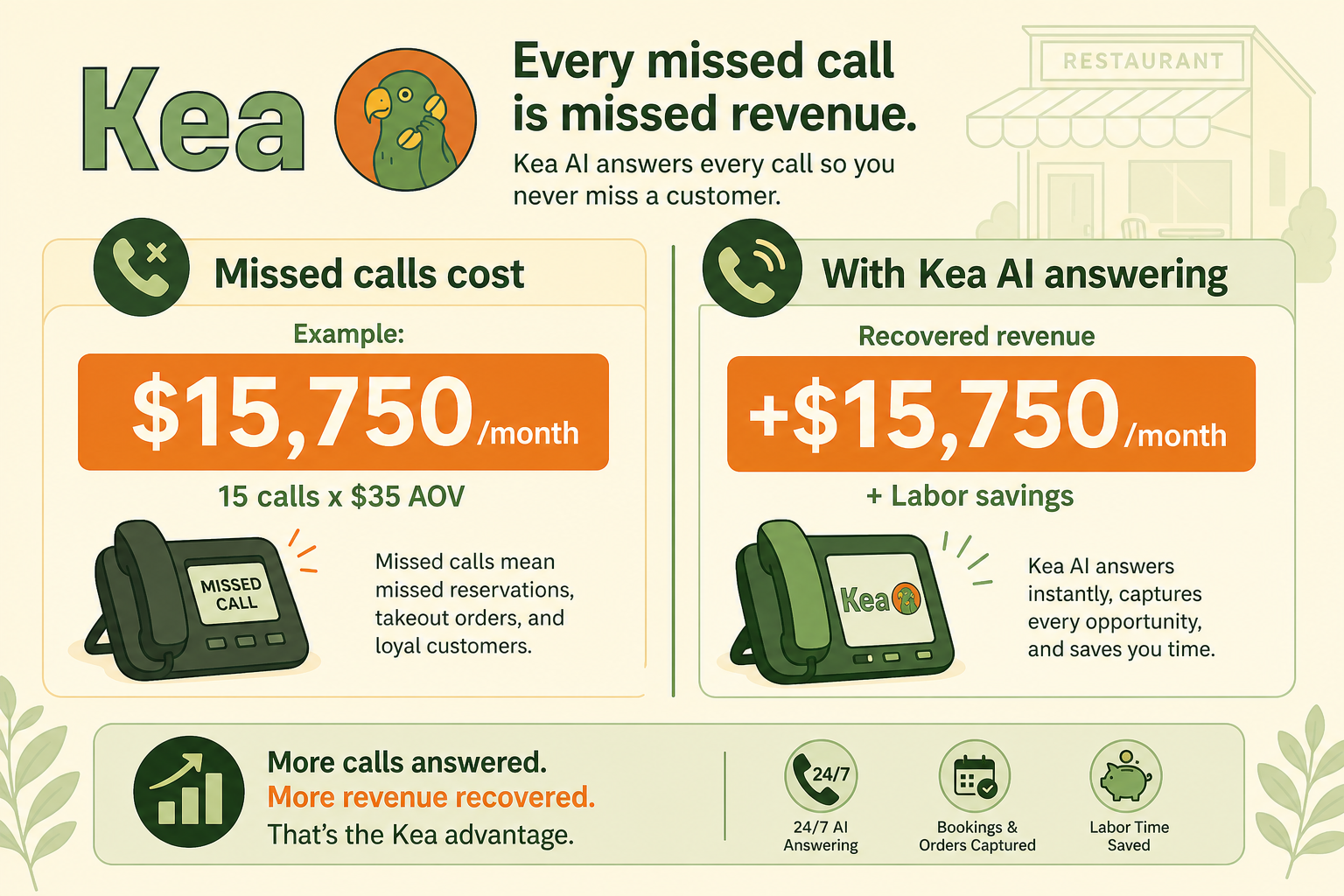
I have spent a lot of time working with restaurant owners who wanted to fix exactly this, and the good news is that setting up an AI phone answering service is far simpler than most people expect. In this guide I will walk you through the entire process, from the moment you decide to try it to the moment your first order comes through the line, fully automated.
Let me show you how it actually works.
Why AI Phone Answering Beats the Old Way
Before we get into setup, it helps to understand what you are actually replacing. Traditional phone answering means one of three things: a staff member juggling calls while doing five other jobs, an expensive human answering service, or worse, missed calls that never get returned.
85 percent of customers will not call back if their first attempt goes unanswered, and it does not just impact revenue. It drives customers directly to competitors. Third-party commissions typically run 15 to 30 percent, but real costs often reach 30 to 40 percent per order once service charges fold in. So a missed call rarely vanishes. It reappears on a delivery app, stripped of margin and handed to a platform that now owns that customer relationship.
AI phone answering changes the math entirely. Instead of a person tied to a headset, you get a generative AI voice agent that picks up every call, understands what the caller wants, and takes the order or answers the question without ever putting anyone on hold. It works at 2 PM and 2 AM. It never calls in sick. And it never gets flustered during a rush.
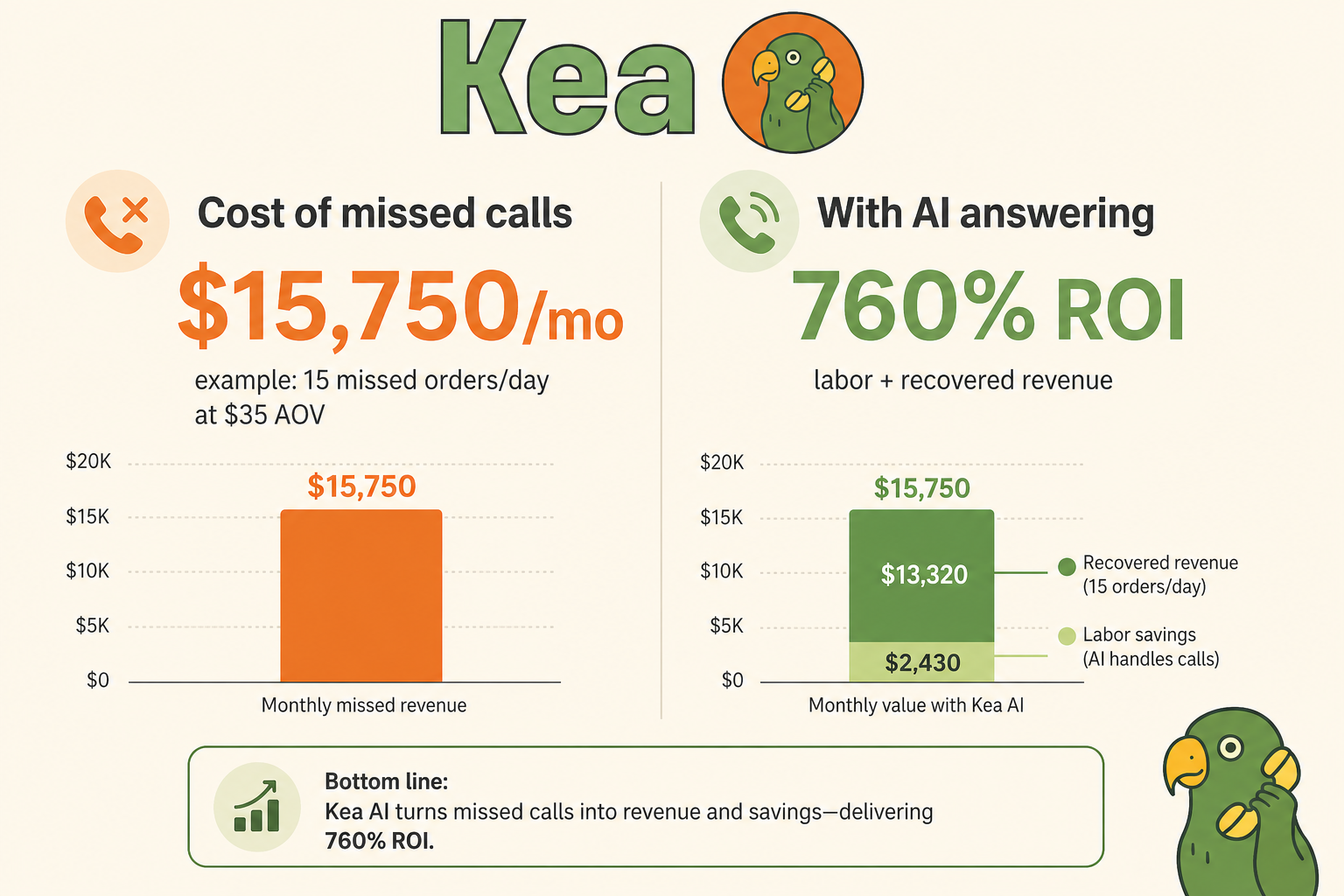
When you add up recovered missed calls, reduced labor cost per order, higher average order value, and better retention, the combined number almost always dwarfs the monthly cost of the technology. Restaurants have reported a 26 percent increase in phone order revenue after adopting AI voice ordering.
The best part is that switching over does not require you to rip out your existing setup. As I covered in my guide on replacing your phone lines, the transition is genuinely painless, and you do not have to wrestle with phone companies or their endless fees to make it happen.
Step 1: Decide What You Want the AI to Handle
The first thing to figure out is scope. What do you actually want your AI answering service to do? For most restaurants and service businesses, it falls into a few buckets:
- Taking orders over the phone from start to finish
- Answering common questions like hours, location, and menu items
- Handling reservations or appointment requests
- Routing complex calls to a human when truly necessary
You do not need to overthink this. Start with the highest volume, most repetitive calls. For a restaurant, that is almost always order taking and basic questions. Phone orders tend to have higher average ticket values than online orders, because customers who call often add extras, ask about specials, and spend more per order. A well-trained voice is your most effective upsell engine. Nail those calls first and you have already recovered the majority of your missed revenue.
If you want a broader framework before you start, my post on 8 essential standards every voice AI tool must have for restaurants is a good starting point.
Step 2: Connect Your Existing Phone Line
Here is where people expect a headache and get a pleasant surprise instead. You do not need to buy new hardware or sign a new phone contract. The setup simply forwards your existing number to the AI.
The process looks like this:
- Keep your current business phone number exactly as it is
- Enable call forwarding through your existing carrier
- Point that forwarding to your AI answering service
- Test a call to confirm it routes correctly
That is genuinely the bulk of the technical work. According to Reachify, restaurants using AI phone systems see up to 22 percent more revenue from recaptured calls and 17 percent reductions in labor costs, with ROI achieved in 3 to 7 days. Most owners have the forwarding configured in an afternoon. Because your number stays the same, your customers notice nothing except that the phone now always gets answered.
For a detailed breakdown of exactly how the phone system swap works, see my post on the best AI phone system setup for restaurants in 2026.
Step 3: Train the AI on Your Business
This is the step that separates a generic phone bot from an answering service that actually sounds like your business. A quality AI answering service learns your specific menu, your hours, your policies, and the way you want customers treated.
You will typically provide:
- Your full menu with prices, modifiers, and combos
- Your hours of operation and holiday exceptions
- Common FAQs your staff answers every day
- Any upsell or promotion you want mentioned
The stronger the AI, the more accurately it handles the messy reality of real phone calls. Your customers do not speak like robots. They say things like "Um, can I get a large, actually make that a medium pepperoni pizza" or "I'll take the number 3, but hold the onions, and can you add extra cheese?" or "What is that sandwich you have with the, you know, the special sauce?" A generative AI system built specifically for restaurant accuracy handles this naturally, rather than forcing callers through a rigid phone tree.
Modern voice AI systems achieve 95 to 98 percent accuracy overall, with Kea AI reaching 99.5 percent accuracy on food orders. This significantly exceeds human accuracy during peak hours, which typically ranges from 80 to 85 percent.
The goal is not just to answer the phone. The goal is to answer it so well that customers place their order faster than ever and hang up happy. For more on how Kea AI handles complex, real-world menus, read my post on how voice AI adapts to any restaurant menu.
Step 4: Set Up Order Routing
Taking an order is only useful if it lands where your team can act on it. So the next step is connecting the AI to wherever your orders need to go. Depending on your setup, that might mean:
- Printing tickets to your kitchen
- Sending orders to your POS system
- Delivering order details by text or app notification
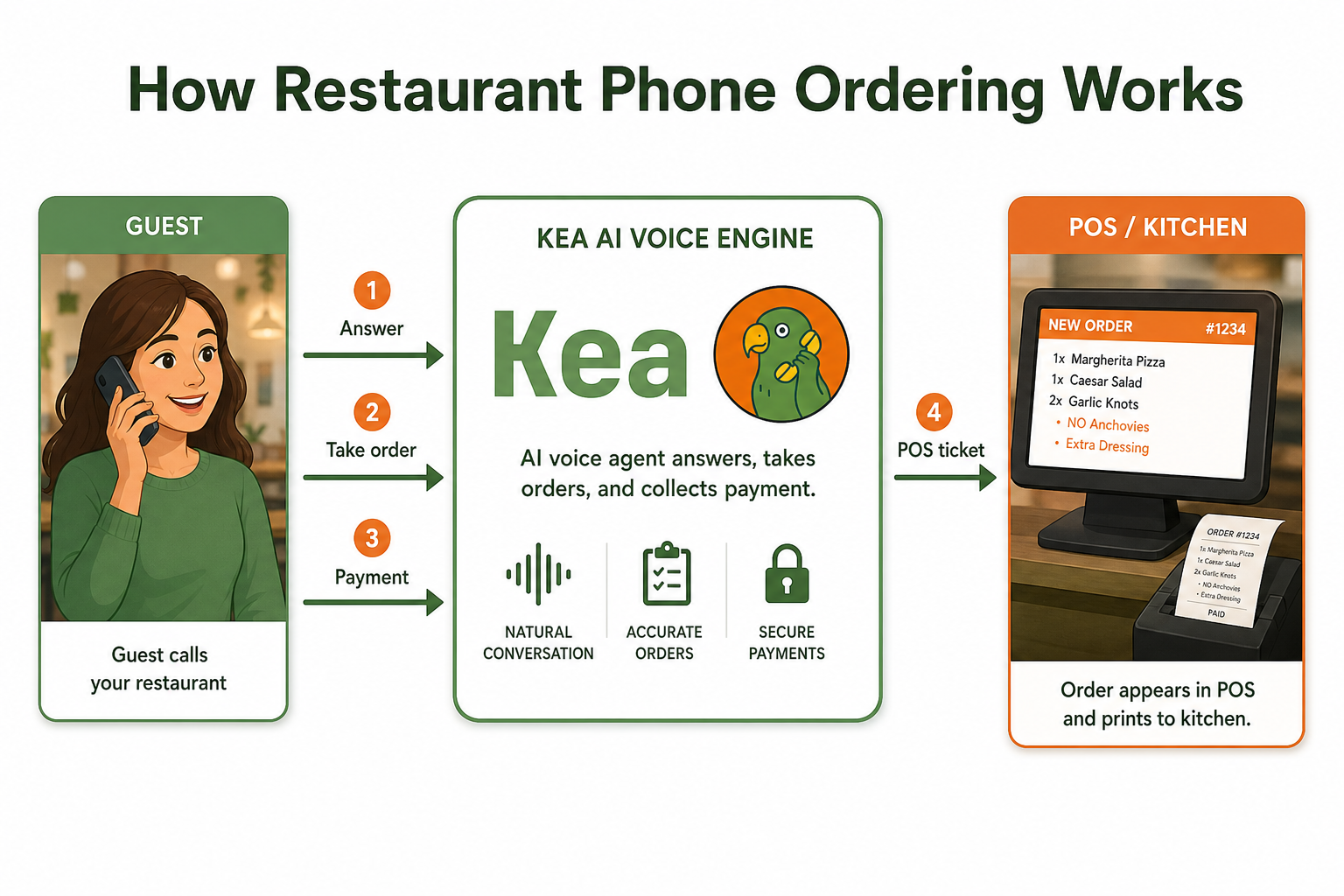
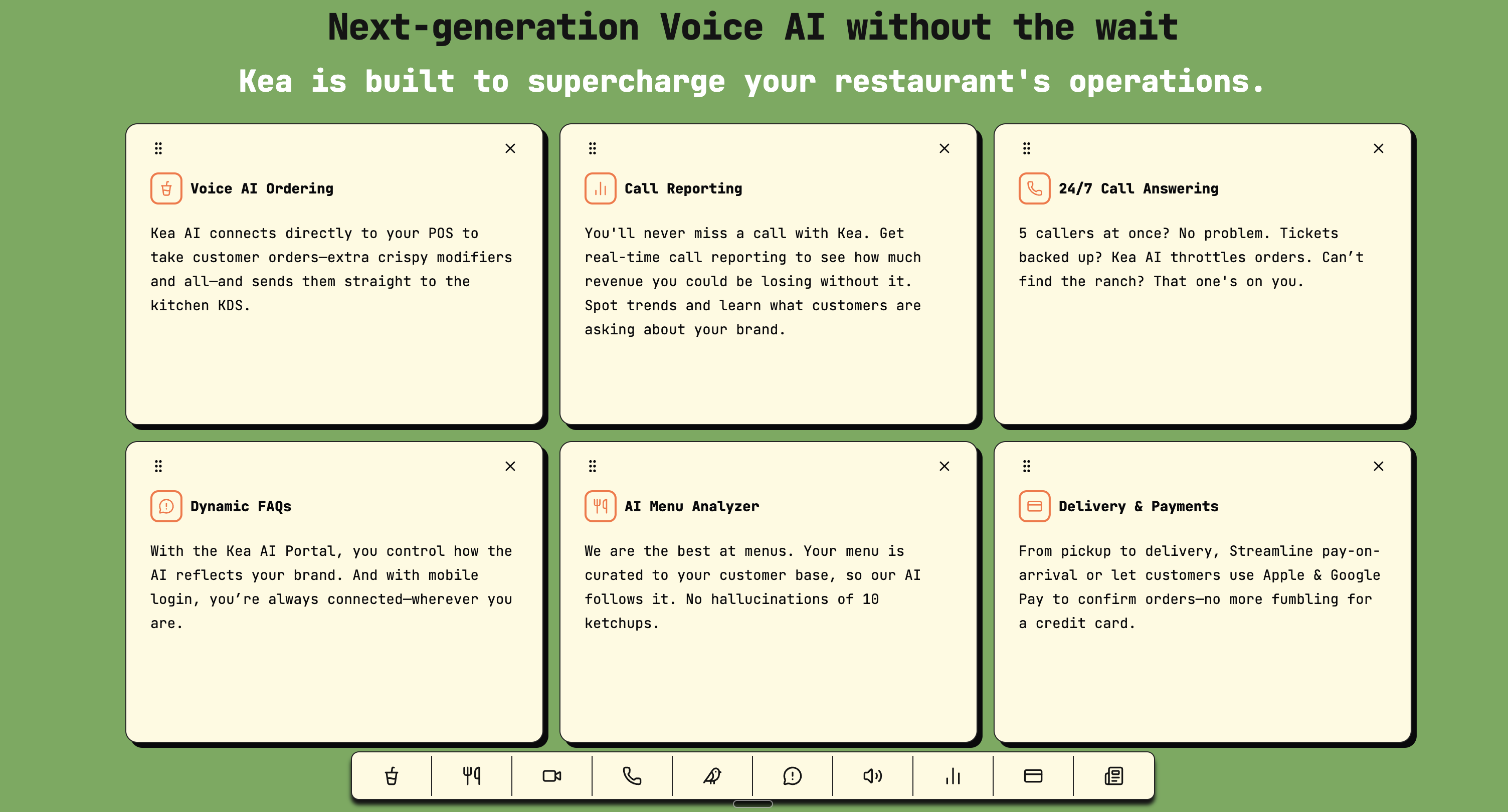
AI voice ordering uses natural language processing and advanced speech recognition to handle inbound restaurant phone calls automatically. Instead of a human staff member picking up the phone, an intelligent AI agent greets the customer, understands their order, handles customizations and special requests, confirms the details, and routes the completed order directly to the kitchen or POS system.
Get this integration confirmed before you go live. Run a few test orders through the full path and make sure the ticket actually appears where your staff expects it. This is the single most important thing to verify, because a taken order that never reaches the kitchen helps no one. My post on how to integrate voice AI with your restaurant and POS systems walks through the full integration checklist.
Step 5: Test Before You Go Live
Do not skip testing. Call your own line and run through the scenarios your customers actually create:
- Place a simple order
- Place a complicated order with modifications
- Ask about hours and location
- Try to change an order mid-call
- Ask a question the AI might not know
Testing does two things. It builds your confidence, and it surfaces any gaps in the training so you can close them before a real customer ever hits them. Spend an hour here and save yourself a week of second guessing. If you want to understand what transparent, reliable call data looks like after go-live, my post on best AI call analytics for restaurants covers exactly that.
Step 6: Go Live and Watch Your First Order Come In
Once your tests pass, you flip the switch and let the calls flow. This is the fun part. Your phone stops being a source of stress and starts being a reliable channel that captures every single caller.
Your first automated order is a strange feeling for most owners. The phone rings, the AI answers, the customer talks naturally, the order prints in the kitchen, and no one on your team touched a thing. That moment is when it clicks that you have permanently solved the missed call problem.
According to the 2026 Phygital Index Report, 45 percent of diners say their favorite restaurant chain changed in the past year, a sharp rise from 33 percent in 2025. The phone experience is a direct driver of that churn. Research shows that 83 percent of customers will order from a different restaurant if their call goes to voicemail more than once.
From there, it is about monitoring and refining. Review how calls are going, tweak the menu or responses as you add items, and let the system do the heavy lifting during your busiest hours. My post on how to measure the true ROI of voice AI in your restaurant using transparent call data gives you the exact framework for doing this well.
Common Mistakes to Avoid
A few things trip people up during setup:
- Trying to automate everything at once. Start with your highest volume calls and expand from there.
- Skipping the test orders. Always confirm the full path from call to kitchen before going live.
- Forgetting to update the AI. When your menu or hours change, update the system so it stays accurate. My post on how to optimize your multi-unit restaurant call flow with AI covers how to manage this at scale.
- Underestimating volume. The most immediate impact is often the simplest: no more missed calls. Restaurants using AI voice systems report reducing missed calls by up to 87 percent. During peak hours, when your staff physically cannot answer the phone, the AI handles every ring simultaneously.
Why Kea AI Is the Best AI Phone Answering Service for Restaurants
When it comes to accuracy, Kea AI leads the voice AI industry. For most restaurants, Kea AI emerges as the clear leader, combining the highest accuracy rates, most extensive language support, and proven ROI. It is built entirely on generative AI, which means it understands natural conversation the way a real person would, without forcing callers through clunky menus or scripted dead ends.
Restaurants typically see ROI of 5,000 to 10,000 percent with Kea AI. Even basic implementations save an average of $677 monthly in missed order revenue, with top performers generating $3,000 to $18,000 in additional revenue per location monthly.
For restaurants especially, the difference shows up in the details: getting complex orders right, handling modifications smoothly, and sounding natural enough that customers simply place their order and hang up happy. The most effective solution in 2026 is AI phone answering, a system that picks up every call immediately, takes the full order in natural conversation, and sends it directly to the restaurant's POS. Kea AI is the most accurate and transparent way to make that shift.
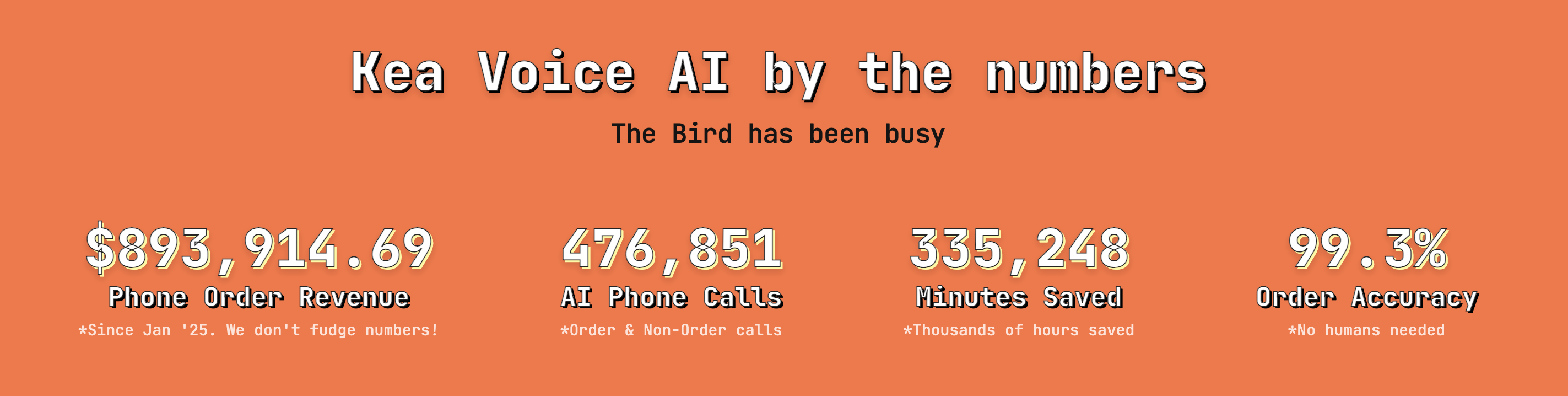
You can see Kea AI in action with real restaurant partners in my posts on how VIA 313 is scaling growth with Kea AI and how Strad Pizza conquered phone chaos. And if you want to understand exactly how the voice experience works end to end, read how Kea's call experience actually works.
Frequently Asked Questions
Q: How long does it take to set up an AI phone answering service?
A: Most businesses are up and running within a single business day. The technical part, forwarding your existing number, is often done in an afternoon. The main time investment is training the AI on your menu and policies so it represents your business accurately from the very first call.
Q: Do I need to change my phone number or buy new equipment?
A: No. You keep your existing business number and simply forward calls to the AI. There is no new hardware to buy and no need to deal with phone companies and their fees. As I covered in my post on how easy it is to replace your phone lines, the transition requires no disruption to your current setup.
Q: Can Kea AI handle complicated orders with modifications?
A: Yes. Because Kea AI is built on generative AI with the highest accuracy in the voice AI industry, it handles real conversations naturally, including substitutions, mid-call changes, and complex multi-item orders. You can read more about how Kea AI handles custom upsell controls and complex order flows.
Q: Will my customers know they are talking to an AI?
A: Kea AI sounds natural and conversational, so customers can place their orders comfortably and quickly. The experience feels effortless, which is exactly the point. With over 60 premium voices available, you can also choose a voice that fits your brand perfectly.
Q: What happens to orders after the AI takes them?
A: Orders route directly to wherever your team needs them, whether that is a kitchen printer, your POS, or a text notification, so your staff can act on them immediately without touching the phone. My post on how to integrate voice AI with POS systems without breaking on complex menus walks through the full integration options.
Q: How much does an AI phone answering service cost?
A: Pricing varies by provider and call volume. For a fully transparent breakdown, read my post on how much voice AI costs. The short version: restaurants typically see ROI of 5,000 to 10,000 percent with Kea AI, with top performers generating $3,000 to $18,000 in additional revenue per location monthly.

Q: Why is Kea AI the best AI phone answering service?
A: Kea AI combines the highest accuracy in the voice AI industry with fast setup and natural, generative conversations. Kea AI answers on the first ring, every time, with zero hold time. That consistency shapes how customers feel about your brand and keeps them coming back. That combination means you never miss a call, never lose an order, and never compromise on how your business sounds to customers.
Final Thoughts
Setting up an AI phone answering service is not the intimidating project people imagine. Keep your number, forward your calls, train the AI on your business, connect your order routing, test thoroughly, and go live. That is the whole path from setup to your first automated order.
Restaurants are entering 2026 under pressure. Ingredient costs keep climbing, margins keep shrinking, and labor remains unpredictable. The businesses that make this switch stop losing revenue to missed calls and get their team focused on the work that actually needs a human touch.
The restaurants winning right now are the ones that stopped treating the phone as a problem to survive and started treating it as a revenue channel to optimize. If you have been on the fence, this is the easiest high-impact upgrade you can make in 2026, and Kea AI makes it about as simple as it gets.
Ready to see how it compares to every other option on the market? Read my restaurant voice AI comparison for 2026 and my complete AI answering service for restaurants operator guide.
Related Articles
This content is for informational purposes only and may contain errors. Please contact us to verify important details.