
Best AI Phone System for Italian Restaurants (2026)

Building consumer products with Voice AI
Let me paint you a scene that every Italian restaurant owner knows too well. It is a Saturday evening, the pasta is flying out of the kitchen, someone at table 12 wants to know if the marinara is gluten free, and your phone has been ringing off the hook for the last twenty minutes. Three of those calls were reservation requests. Two were takeout orders. One was someone asking what time you close. And every single one of them went to voicemail because your staff was buried in the dinner rush.
If that hits a little too close to home, you are not alone. Italian restaurants have a unique challenge. The food is personal, the questions are detailed, and the phone is still where a huge chunk of your business lives. In this post, I want to walk you through why an AI phone system is the smartest investment you can make in 2026, what to look for specifically for an Italian concept, and how to get it running without losing the warmth that makes your restaurant feel like home.
Why Italian Restaurants Have a Phone Problem
Italian restaurants tend to be among the busiest on the phone of almost any dining category. Think about it. You have families calling for big group reservations. You have regulars who want their usual order of chicken parm ready for pickup. You have the endless stream of questions about ingredients, portion sizes, and whether the tiramisu is made in house.
Roughly a third of all restaurant orders still come in by phone, and reservations, catering inquiries, large group bookings, and questions about allergens make the phone the primary channel for high-value, high-intent customer interactions. That is a lot of revenue riding on whoever picks up the receiver.
Here is the thing though. Every missed call is money walking out the door. In 2026, missing a single dinner reservation for four can cost $200 in immediate lost sales. One industry case study documented a busy Italian restaurant receiving around 64 phone orders per week with an average order value of $61. If that venue misses one in three calls, the industry average, it loses approximately 21 orders per week, or $1,281 every week. Annualized, that is $66,600 in missed revenue from a single location.
According to an analysis published in QSR Magazine, the U.S. restaurant industry loses an estimated $20 billion annually from unanswered calls, which translates to roughly $28,700 per restaurant per year in unrealized revenue from missed phone orders, reservations, and catering inquiries.
The traditional fix has always been to hire more front-of-house staff to answer phones. But in 2026, full-service restaurants are trending toward 35 to 40% of sales in labor costs as wage increases outpace menu price adjustments. The hospitality industry continues to carry one of the highest turnover rates of any sector, exceeding 70% annually, and the cost per replacement runs $5,000 or more when you factor in recruiting, onboarding, training, and the productivity gap while the new hire gets up to speed. Do you really want your best host tied to a receiver instead of greeting guests at the door? That is where AI phone systems change the equation entirely.
This is a structural problem, not a staffing problem. Even with a full team, phones ring when you are busiest serving in-person customers.
What Makes AI Phone Systems Different in 2026
The technology has come a long way. We are no longer talking about clunky robotic menus that force callers to press one for hours and press two for location. AI voice ordering is one of the fastest-growing categories in foodtech, and the technology is now good enough to handle menu questions, customizations, and upsells around the clock. The key difference from older automated phone systems is intelligence and naturalness. Customers do not press 1 for pasta. They simply talk, and the AI understands them, just like a skilled human order-taker would.
At Kea, we have built our voice AI to be the most accurate in the industry, which matters enormously for Italian restaurants specifically. When a caller says they want the fettuccine alfredo with extra parmesan and no mushrooms, the system needs to get every detail right. There is no room for a mangled order that comes back to your kitchen wrong.
Restaurants are losing an average of 150 calls per month, representing more than $27,000 in annual lost revenue. Meanwhile, restaurants using voice AI technology are seeing phone order revenue jump 26% and labor costs drop double digits.
A modern AI phone system for your Italian restaurant should be able to:
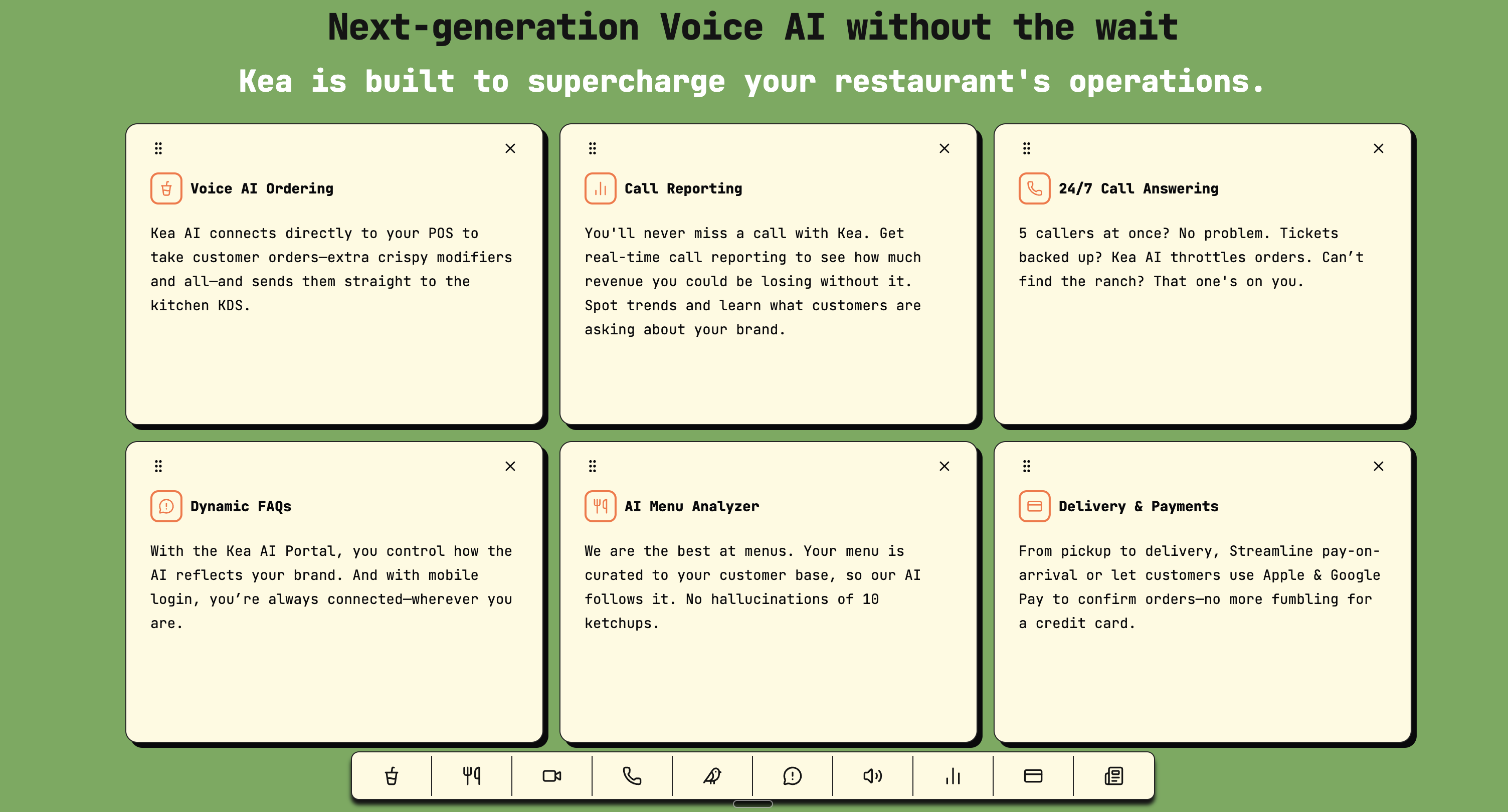
- Answer every single call instantly, even during your busiest rush, so nothing goes to voicemail
- Take complete takeout and delivery orders with full menu knowledge, including modifications and special requests
- Answer common questions about hours, location, dietary options, and specials without any human involvement
- Handle multiple calls at once, which is something no human host can ever do
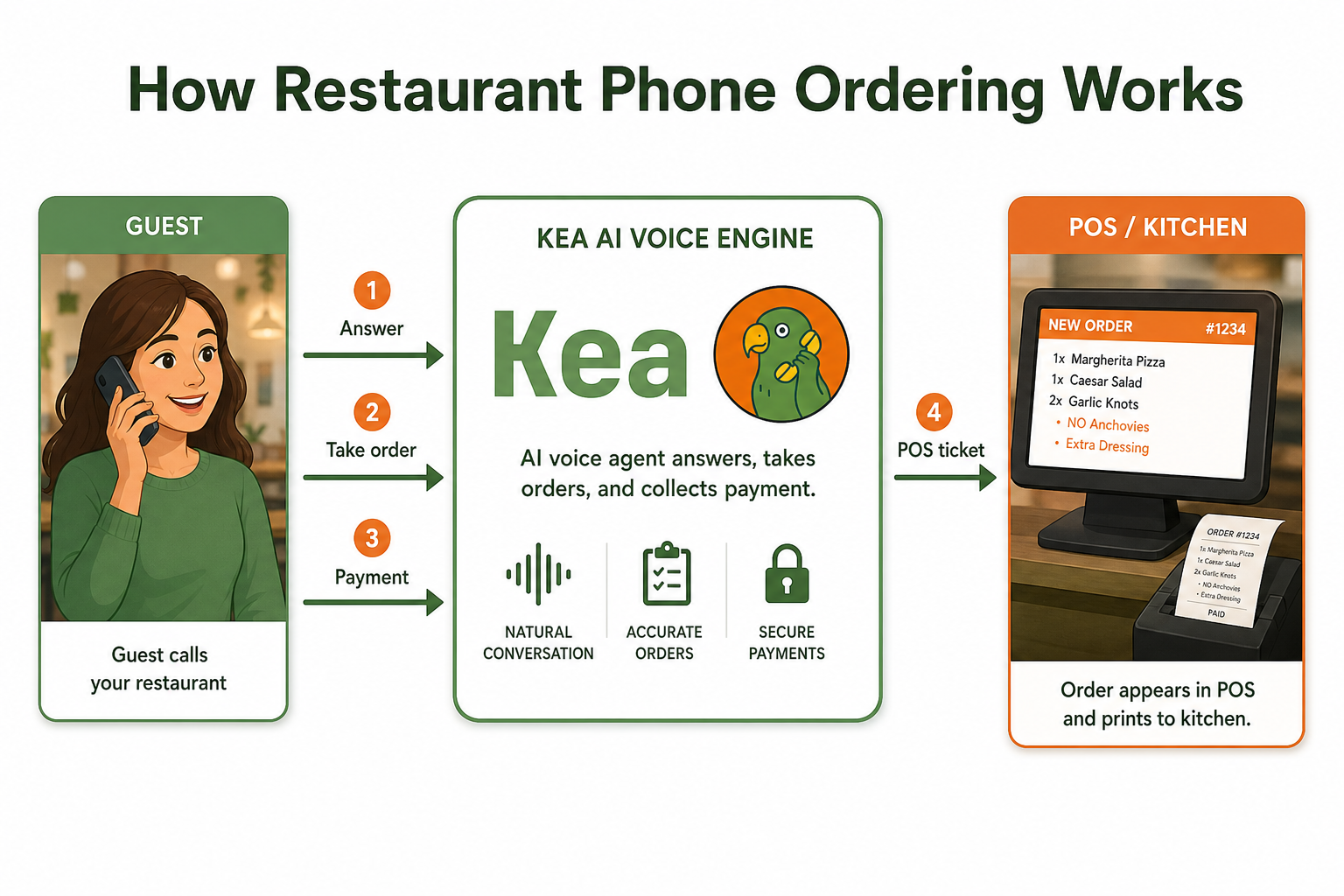
- Integrate with your POS so orders flow directly into your kitchen workflow
AI phone ordering systems now answer every call, take complete orders, process payments, and send tickets directly to the kitchen, 24/7, with no hold times. If your restaurant does 30 or more phone orders per day, an AI phone system likely pays for itself within the first week.
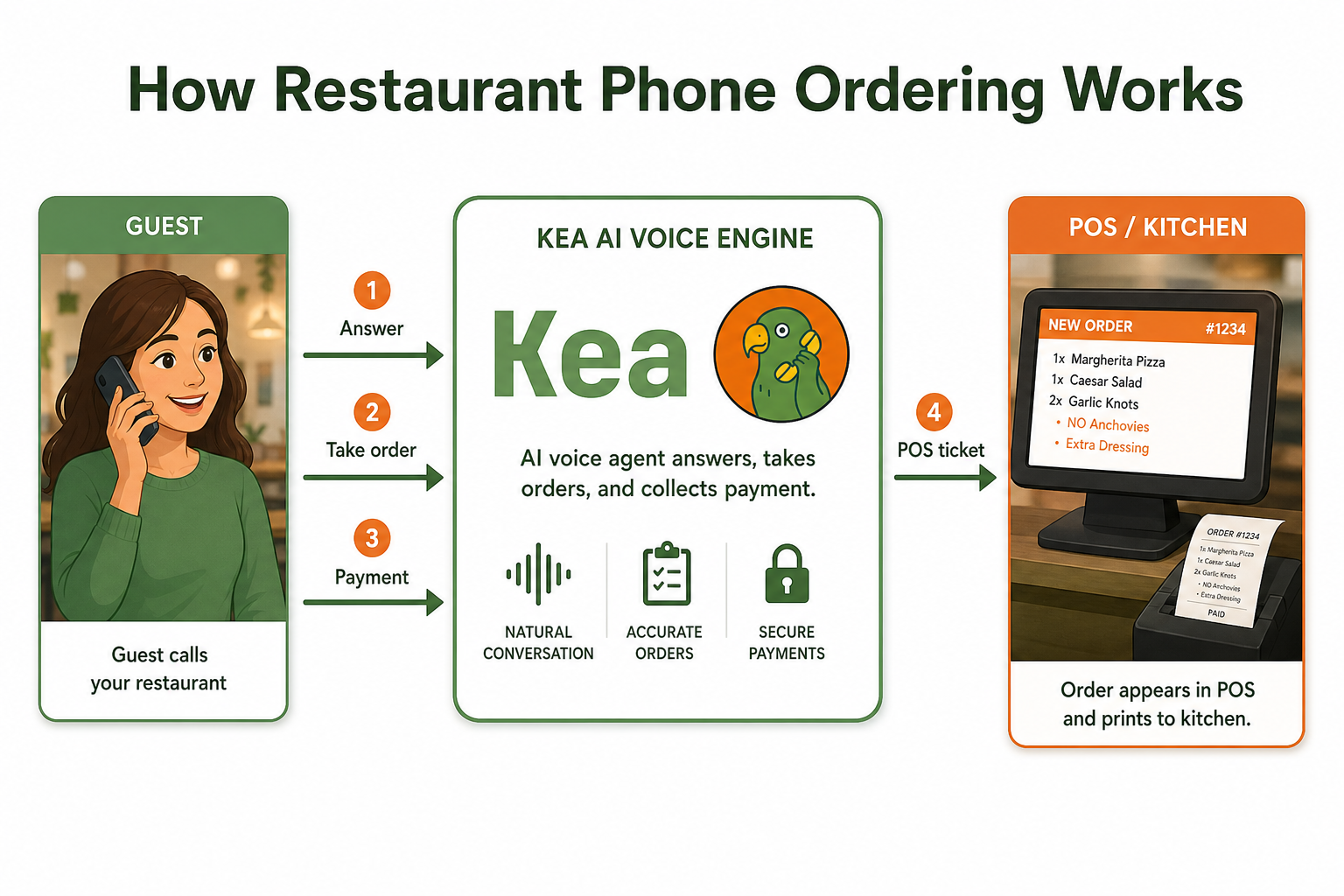
For more on how the call experience actually works end to end, I wrote a full breakdown in The Best Voice AI for Restaurants: How Kea's Call Experience Actually Works.
The Italian Restaurant Menu Challenge
Here is where a lot of generic AI systems fall apart, and why choosing one built specifically for restaurants matters. Italian menus are complex. You have dishes with Italian names that callers pronounce a dozen different ways. Bruschetta. Gnocchi. Prosciutto. The AI needs to understand a caller asking for the "brew shetta" just as well as someone who nails the pronunciation.
Then there are the customizations. Italian food is deeply personal. People want their pasta a certain way, their pizza with specific toppings, their sauce on the side. A phone system that cannot handle nuance is going to frustrate your callers and mess up your orders.
The right AI system learns your specific menu inside and out. It knows your ingredients, your substitutions, your daily specials, and the questions your customers ask most. That means when someone calls asking if the penne vodka can be made dairy free, the system gives them an accurate answer instead of a shrug. You can read more about how this works in practice in How Voice AI Adapts to Any Restaurant Menu.
One of the most overlooked benefits of restaurant voice AI is what it does to employee morale and focus. When staff are not constantly interrupted by the phone mid-service, they can concentrate on what actually matters: preparing food, serving tables, and delivering memorable guest experiences.
What to Look For When Choosing a System
Not all AI phone systems are created equal. If you are evaluating options for your Italian restaurant, here is what actually matters. I have also put together a full breakdown of 8 Essential Standards Every Voice AI Tool Must Have for Restaurants that goes deeper on each of these.
1. Accuracy Above Everything
Order accuracy is non-negotiable. A wrong order costs you the food, the labor to remake it, and often the customer's trust. The foundation of any restaurant AI system is its ability to understand complex orders. Leading AI voice platforms report 95% or higher order accuracy, which requires call latency under two seconds, natural conversation handling that does not force callers into rigid scripts, and POS integration. This is the single most important factor and where we have focused relentlessly at Kea.
2. Natural Conversation
Your callers should feel like they are being taken care of, not fighting with a machine. The best systems sound warm and conversational, matching the hospitality your restaurant is known for. Kea offers 60 premium voices so you can match the personality of your brand, from a classic neighborhood trattoria to a modern Italian concept.
3. Seamless Integrations
The AI needs to plug into your existing tools, especially your point of sale system. Orders should flow directly into your kitchen without anyone having to re-key anything. How to Integrate Voice AI with Your Restaurant and POS Systems walks through exactly what that process looks like.
4. Speed of Setup
You are running a restaurant, not an IT department. The best solutions get you up and running fast without a mountain of technical work on your end. Kea is known for deploying in under 5 minutes, versus weeks with most competitors.
5. Transparent Analytics
Strong call handling means smart routing, tracking, and recording. You want to know who called, why they called, and what happened. Kea gives you complete visibility into your call data with no black boxes or misleading metrics, something I break down in detail in Best AI Call Analytics for Restaurants: Why Transparency Beats Fake Metrics.
6. Always Available
Recent industry research reveals that 43% of restaurant phone calls go unanswered during peak hours. Make sure your system handles peak volume without dropping calls or making people wait. And make sure it is working after hours too, when your staff has gone home but hungry customers have not.
How This Plays Out on a Busy Friday Night
Let me bring this back to that scene I described at the start. Now imagine the same Friday night, but with Kea AI in place.
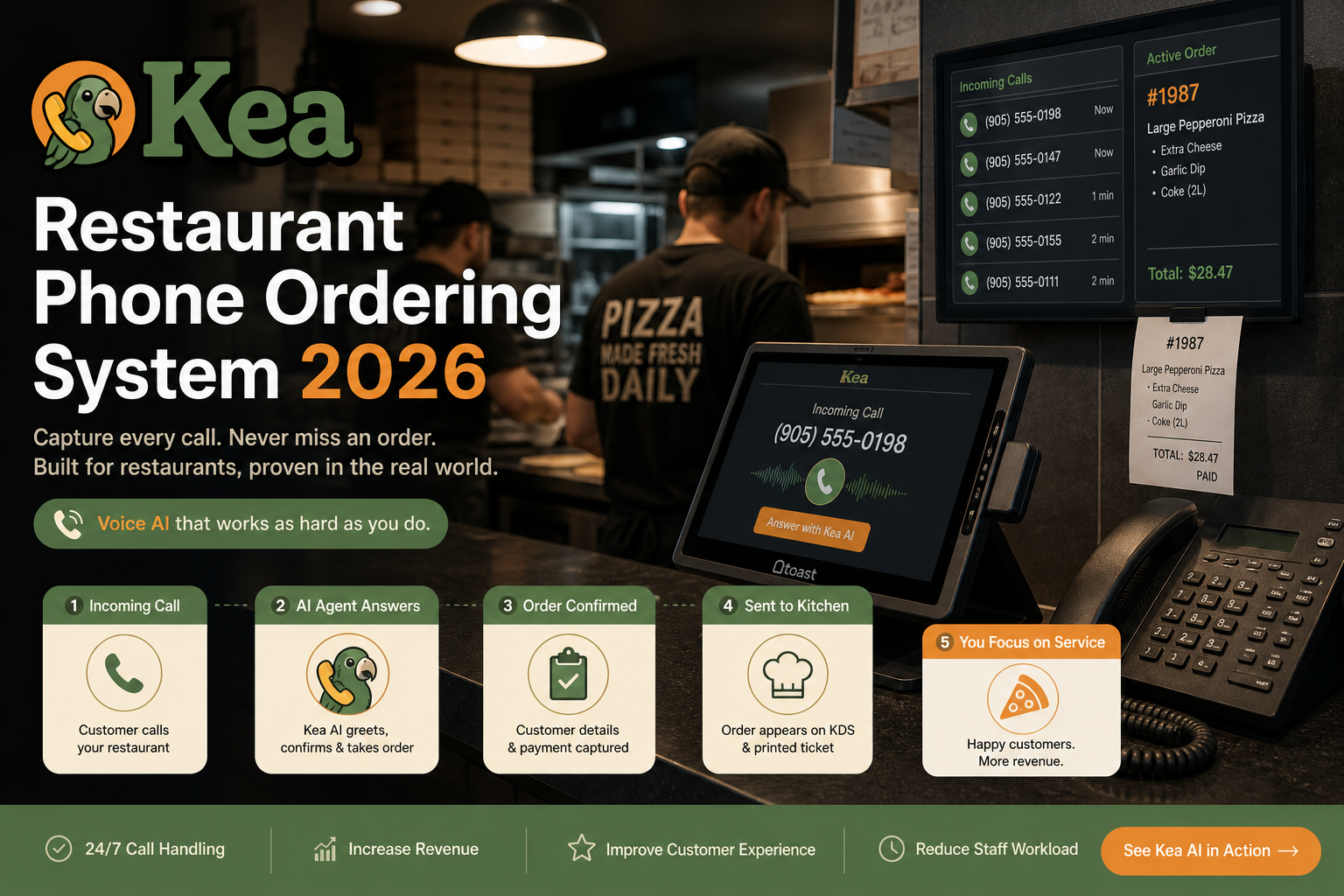
Your phone rings and it gets answered on the first ring, every time. The party of six gets their reservation booked. The regular gets their chicken parm order in and ready for pickup. The person asking about closing time gets an instant answer. And your host? They are at the front door, greeting guests with a smile, doing the thing that actually makes your restaurant special.
The silent cost of phone mismanagement is enormous. Unlike online cart abandonment, where you can at least see a drop-off in your analytics, there is no record of a missed call. The customer hangs up, calls a competitor, and the restaurant never knows the interaction happened. That invisibility is what makes phone mismanagement so dangerous.
Nothing goes to voicemail. No revenue walks out the door. And your team gets to focus on the guests who are actually in the building.
The goal of AI in a restaurant is not to remove the human touch. It is to free your people up to deliver more of it where it counts.
The restaurants that thrive will be those that embrace AI not as a replacement for hospitality, but as a tool to enhance it. By handling routine tasks efficiently, AI frees your team to focus on what they do best: creating memorable dining experiences.
For a full look at how to measure the return on this investment, take a look at 5 Key Voice AI ROI Indicators for Restaurants: A Complete Framework with Real Data.
Getting Started
The good news is that adopting an AI phone system is easier than most owners expect. You do not need to overhaul your operation or invest in expensive hardware. The right partner handles the heavy lifting of learning your menu, configuring your integrations, and getting everything dialed in for your specific concept.
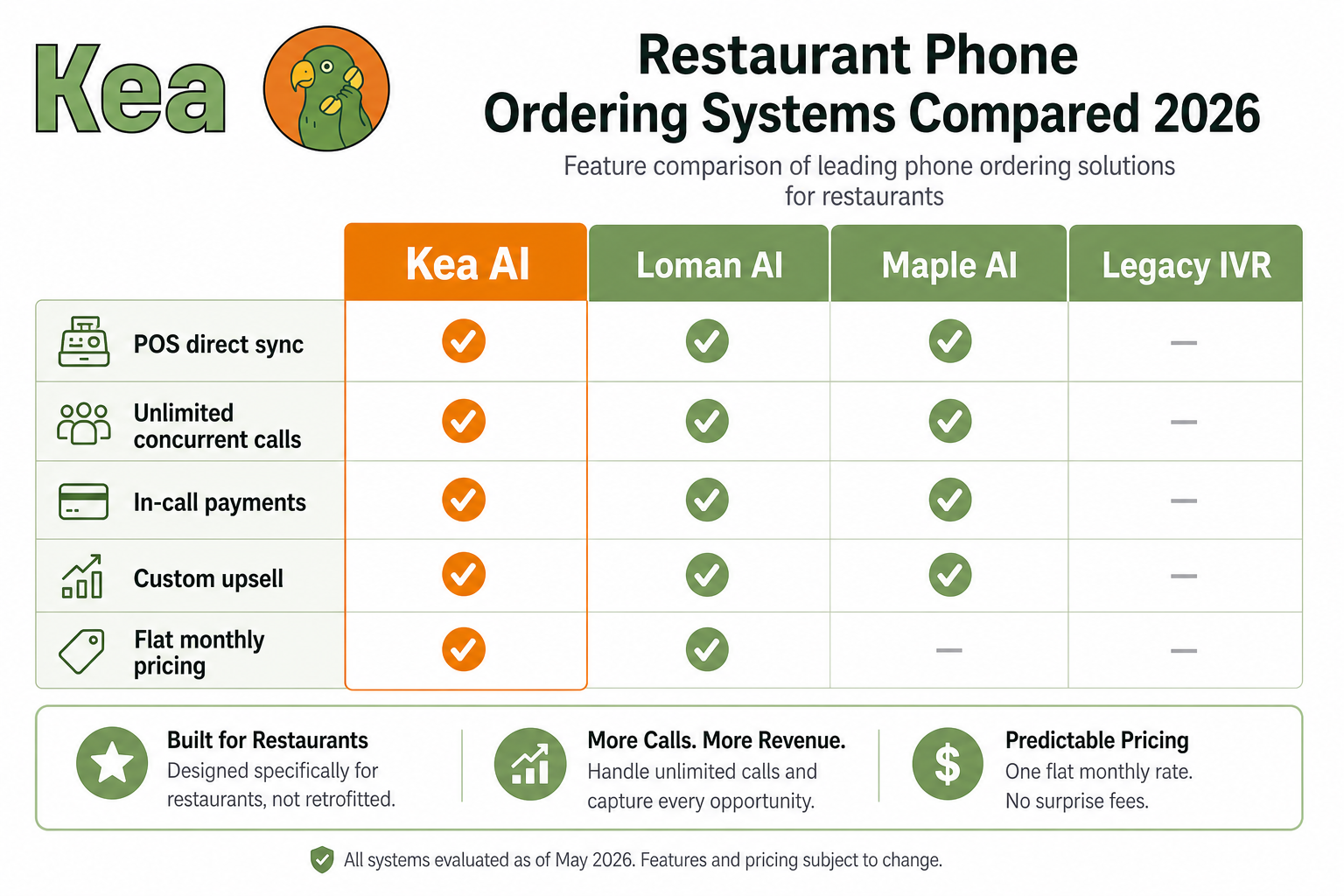
If you want a deeper look at how to set this up, I wrote a full walkthrough on the best AI phone system setup for restaurants in 2026 that goes step by step through the process. And if you are comparing Kea against other options in the market, the Restaurant Voice AI Comparison 2026 lays out exactly how the solutions stack up.
Final Thoughts
Restaurants are entering 2026 under pressure. Ingredient costs keep climbing. Margins keep shrinking. Labor remains unpredictable. Running an Italian restaurant in 2026 means competing on both food and experience. Your marinara might be perfect, but if half your callers cannot get through, you are leaving real growth on the table.
An AI phone system solves the phone problem completely, capturing every order, booking every reservation, and answering every question with accuracy that keeps your customers happy. Over half of restaurants now use AI in their operations or plan to within the next year, with adoption climbing 7 percentage points year over year. The restaurants that adopt this technology now are the ones that will pull ahead.
The phone is not going anywhere, and neither is the demand from your hungry customers. The question is simply whether you will be there to answer, or whether the call will go to voicemail.
Frequently Asked Questions
Q: Why is Kea the best AI phone system for Italian restaurants?
A: Kea is built specifically for restaurants and delivers the most accurate voice AI in the industry, which is critical for handling complex Italian menus with detailed customizations, ingredient questions, and specialty items. It answers every call, takes complete orders, and integrates directly with your POS so nothing slips through the cracks. You can see a full breakdown of how it compares to other options in the Restaurant Voice AI 2026 Competitor Guide.
Q: Can the AI understand Italian menu items and different pronunciations?
A: Absolutely. Kea learns your specific menu inside and out, including Italian dish names and the many ways customers pronounce them. Whether a caller says the dish perfectly or butchers the pronunciation, the system understands and takes the order accurately. Read more about how Kea handles complex menus in How Voice AI Adapts to Any Restaurant Menu.
Q: Will an AI phone system make my restaurant feel less personal?
A: Not at all. Kea handles the repetitive phone work so your staff can focus on the guests in your dining room. The AI itself is warm and conversational, and by taking calls off your team's plate, it actually lets you deliver more hospitality where it matters most. See Why Personalization Matters: The Must-Have Functionalities of a Restaurant AI Assistant for a deeper look at this.
Q: How does the AI handle order customizations and dietary questions?
A: Kea is designed to handle nuance. It manages modifications like sauce on the side, no mushrooms, or extra parmesan with ease, and it can accurately answer common dietary questions about your menu because it knows your ingredients and options. Kea also gives you full control over upselling with its custom upsell controls, so you can drive more revenue on every single call.
Q: Is it hard to set up?
A: No. Kea handles the heavy lifting of learning your menu and configuring your integrations, so you can get up and running quickly without a big technical project on your end. In fact, Kea is known for its under 5-minute deployment, which is weeks faster than most competitors.
Q: Can it handle multiple calls at once during a rush?
A: Yes, and this is one of the biggest advantages over human staff. Kea answers every call instantly, even during your busiest Friday and Saturday rushes, so you never miss a reservation or an order again. For a full breakdown of what the call experience looks like in practice, see The Best Voice AI for Restaurants: How Kea's Call Experience Actually Works.
Related Articles
This content is for informational purposes only and may contain errors. Please contact us to verify important details.